
Surf Training Over 40: What Actually Happens to Your Body, and How to Keep Ripping for Life
Jul 11, 2026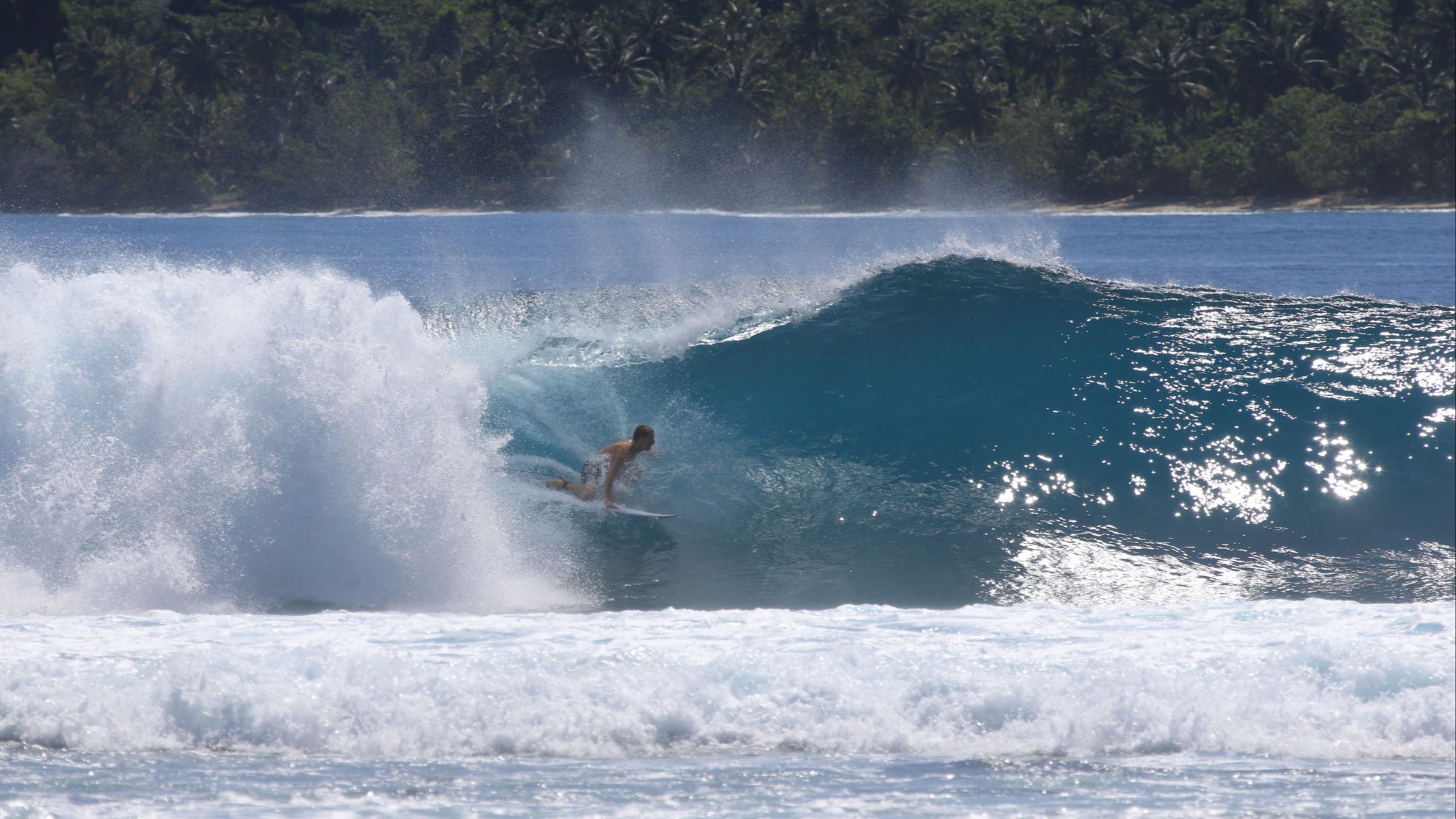
Surfing doesn't have an expiration date. But somewhere in your 40s, sometimes earlier, sometimes later, your body starts to feel like it does.
Sessions get shorter. Paddling gets harder. Recovery takes longer. That wave you used to catch effortlessly? You're a half stroke late. Most surfers don't see it coming until it's already happening.
I'm Dr. Jon Saul, a physical therapist and athletic trainer with over 10 years of experience in orthopedics and more than 25 years of surfing experience. What follows is the clinical side of what's actually happening to your body, translated into surf specific application you can use in the water.
 As surfers, we spend a huge amount of our time hurling our bodies through some of the most violent places in the ocean. This obsession comes at a cost. Injuries are part of the deal, and as your tissues become less supple and you become less resilient, small tweaks and strains start showing up more often and stick around longer. Over time that means less time in the water.
It does not have to go that way. So let's get into it. What actually changes when you keep surfing after 40, and on into your 50s and 60s?
Why Surfing Gets Harder After 40
Surfing in Your 40s: The Loss of Speed and Fast Twitch Power
Through your 40s, the biggest thing you start noticing is a loss of speed, or fast twitch muscle response.
Your type 2 muscle fibers, the fast twitch fibers, begin to atrophy. Some of them will actually convert into type 1, or slow twitch fibers, unless they are properly trained. The research on rate of force development shows how quickly this quality erodes when it is not being challenged, and how much of it is driven by neuromuscular changes rather than the muscle alone (Ruggiero and Gruber, 2024).
Where surfers feel this most is the pop up. You have a harder time getting your feet up underneath you. That leads to more blown waves, a dropping wave count, and a lot less fun out there. It is frustrating, and it sneaks up on you.
You also feel it in your paddle power. Those short burst sprints you rely on to get under a wave before the lip detonates on your head, or to turn and burn and stroke into a wave early enough to make the drop. That explosive paddle is a fast twitch quality, and it fades when you stop training it.
Training to maintain this does more than protect your wave count. It keeps you in better position on the wave and keeps your tissues strong under high loads, which helps prevent the small strains and sprains that start creeping in during this decade.
Surfing in Your 50s: Sarcopenia Sets In
As you move into your 50s, you typically see the onset of sarcopenia along with continued transition of your muscle fiber types and ongoing atrophy of those type 2 fibers.
Sarcopenia is the age related loss of muscle mass. In plain terms, if you are not training and progressively loading your body over time, your body will shed muscle. This is a major issue in an aging population, and the further you move through the human lifecycle, the more strongly it becomes correlated with mortality and disability (Cruz-Jentoft and Sayer, 2019). The underlying changes in how muscle fibers atrophy and drop out have been well documented (Brook et al., 2018).
This is not just about how you surf. It is about how long you stay healthy, period. A large study of over 8,000 men found that those with greater muscular strength had significantly lower rates of death from all causes and from cancer, even after accounting for how aerobically fit they were (Ruiz et al., 2008). Strength is not vanity. It is one of the clearest signals we have for how well you are going to age, in the water and out of it.
This is the decade where the cost of doing nothing starts to compound in a way you can feel, not just measure.
Surfing in Your 60s: Compounding and Stiffness
In your 60s, both of those processes keep compounding.
If you have not been maintaining your mobility, the stiffness you have gathered over the past two decades really starts to show. You see it in limited hip mobility, a stiff upper back, and old injuries that have layered on compensatory patterns over the years. The aging athlete research makes the point clearly that these trajectories are heavily influenced by training status, not age alone (Gries and Trappe, 2022).
The longer this goes on without training, the deeper the hole gets. But here is the flip side: if you start early, you can maintain and prevent the majority of these changes.
The Injury Comeback Gap
There is one more piece that catches surfers off guard, and it has nothing to do with the calendar.
Whether it is a shoulder repair, a bad back, or months out of the water, the transition back is where a lot of surfers quietly lose ground they never get back. Not because they did not heal. Because nobody built them a bridge between recovered and surf ready.
Being medically cleared and being surf ready are two different things. Surfing after injury asks your body for prone paddling endurance, explosive pop up mechanics, and rotational load your follow up appointment never tested. Closing that gap, between discharge from physical therapy and paddling out with confidence, is exactly what surf specific training is designed to do.
If you are facing a major procedure, I break this down in depth for one of the most common ones here: Surfing After Hip Replacement: A Surf Physical Therapist's Guide.
Aging Is Not a Death Sentence for Your Surfing
I want to stress this part.
Most of the decline is trainable, not inevitable. You can design a fitness program specifically to slow, prevent, and even reverse a lot of what happens to your body and your tissues as you age. The goal is not just healthy aging in the abstract. The goal is to build a body that keeps you in the water, surfing, and having as much fun as humanly possible.
So if this is largely preventable, we need a smart way to go about it. The framework I use with surfers runs in three phases.
The Framework: Foundation, Resilience, Performance
Foundation Phase
In the foundation phase, you are building a baseline of movement control, stability, and strength. This gives you a solid platform to work from so you do not get hurt when you progress into more dynamic, surf specific movements later. This is where everyone should start, especially if you have been out of a routine for a while.
Resilience Phase
Next is the resilience phase. Here we keep everything from the foundation phase and start sprinkling in eccentric loading for tendon health, plus jump and landing training so you can absorb force well without form breakdown or damage to other tissues and structures. This is the phase that prepares your body for the real demands of surfing.
Performance Phase
The last phase is the performance phase. This is where we train sport specific power and the movements your surfing actually demands. Fast, powerful leg drive to push through turns and come off the bottom. Quick hip flexor movement to snap your legs under you on the pop up. Box jumps to build explosiveness through the lower body for maneuvers, plus the landing component so you can flow right into your next move.
And here is the best part. None of this requires becoming a gym rat. You can start dialing it in with just two to three hours a week in the gym.
Exercises for Surfers Over 40: How to Start Right Now
If you have been out of the game for a while and you are trying to get back on the horse, keep it simple. A solid starting point looks like this:
- An upper body push, like a push up variation
- An upper body pull, like a row variation
- A lower body functional pattern, like a squat or a lunge, whatever feels best for your knees and lower back
- A little banded shoulder work for paddle endurance and shoulder health
- A little hip and glute work to support your low back and take stress off your knees
Build that into a 30 to 40 minute routine, run it two to three times a week, and you will start to see real changes in how you feel, how you move, and how you surf. Progress the movements over time and you have the beginning of a program that keeps you in the lineup for decades.
Frequently Asked Questions
Can you still get better at surfing after 40 or 50?
Yes. While some physical qualities decline with age, most of that decline is trainable. Surfers who strength train and maintain mobility can keep improving their surfing well into their 50s, 60s, and beyond.
How often should older surfers train out of the water?
Two to three sessions per week, totaling about two to three hours, is enough to build and maintain the strength, power, and mobility that surfing demands.
What is the most important thing to train for surfing after 40?
Fast twitch power and strength are the first to go and the most noticeable in your pop up and paddle. A program that maintains explosive power while supporting joint health gives you the biggest return.
Do I need a gym to train for surfing?
No. A simple routine built around a push, a pull, a lower body pattern, plus banded shoulder and hip work can be done with minimal equipment and still deliver real results.
Why is surfing harder as you get older?
Surfing gets harder with age mostly because of the loss of fast twitch muscle power, declining muscle mass, and reduced mobility. These changes affect your pop up, paddle power, and recovery. The good news is that all three respond well to consistent strength and mobility training.
How do you keep surfing in your 50s and 60s?
Stay strong and mobile. Surfers who keep training through their 50s and 60s maintain the power, joint health, and tissue resilience that surfing demands, which lets them keep catching waves and recovering well between sessions.
Ready to Build Your Own Plan?
Surfers Performance exists to promote longevity in the lineup as a philosophy and to teach surfers how to maintain their bodies through their 50s, 60s, and 70s so they can keep having fun in the water for as long as possible.
If you are just getting started, grab the free Surf Trip Prep Guide. It is the same foundation I build with surfers who want to show up stronger, move better, and make the most of every session.
If you have a surf trip on the calendar and want to show up strong instead of sore and sidelined by day three, the Surf Trip Prep Program is a focused, self paced way to get ready.
And if you want a plan built specifically for you, my one on one 6 week coaching program takes everything above and tailors it to your body, your history, and your surfing goals. We assess where you are, build your foundation, and progress you toward the performance qualities that matter most in the water.
Either way, the best time to start was in your 20s and 30s. The next best time is right now.
References
- Ruggiero L, Gruber M. Neuromuscular mechanisms for the fast decline in rate of force development with muscle disuse. The Journal of Physiology, 2024.
- Cruz-Jentoft AJ, Sayer AA. Sarcopenia. The Lancet, 2019; 393(10191): 2636 to 2646.
- Brook MS, Wilkinson DJ, Atherton PJ, Smith K. The age related loss of skeletal muscle mass and function. Ageing Research Reviews, 2018; 47: 123 to 132.
- Ruiz JR, Sui X, Lobelo F, et al. Association between muscular strength and mortality in men: prospective cohort study. BMJ, 2008; 337: a439. https://doi.org/10.1136/bmj.a439
- Gries KJ, Trappe SW. The aging athlete: paradigm of healthy aging. International Journal of Sports Medicine, 2022; 43: 661 to 678.